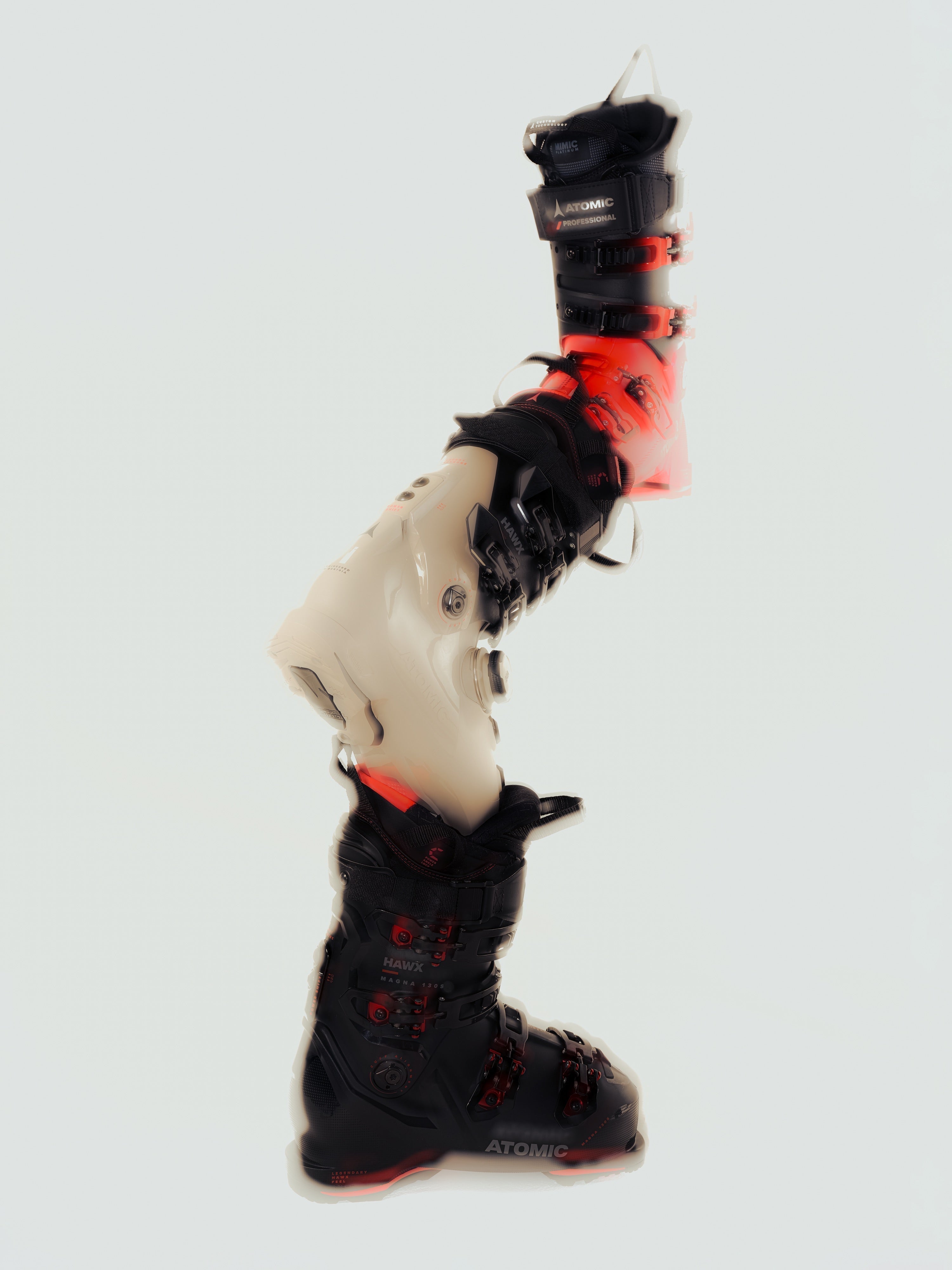
Ski boots are the most individual piece of equipment a skier owns and, as the connection between the skier and the ski, they are one of the most important elements on the mountain. Everything has to fit perfectly. It’s no surprise that many skiers approach buying new ski boots with a certain amount of hesitation.
Even after carefully selecting the right size and width, many skiers find that a new pair of boots doesn’t feel completely comfortable at first. Adjusting the boot -known as bootfitting - sounds promising, but it can also seem complicated and time-consuming.
However, there is no need to worry. Modern ski boots not only offer better fits than ever before, they can also be adjusted quickly and easily to match the individual shape of your foot - often without costing a fortune.
Where Does the Ski Boot Hurt?
Even when a ski boot has the right specifications and size, there may still be areas where it creates pressure points because it is too tight, or areas where it leaves too much room around the foot.
The latter is also undesirable, as “too much space” allows the foot to move inside the boot. This reduces power transfer and can cause friction inside the liner.
Adjusting a ski boot can therefore mean expanding specific pressure areas or filling gaps between the foot and the shell. What may sound like a job for an orthopedic specialist can usually be done in just a few steps by a specialist retailer with trained staff.
Both the liner and the shell of modern ski boots can be individually adapted to the shape of the foot using different techniques.
What Adjustments Are Possible?
In the past, bootfitting was a highly specialized process, almost surrounded by an air of mystery. Boots were ground, modified, and custom-foamed, and the names of the best specialists were shared almost like the addresses of top chefs - only with close friends and behind closed doors.
Fortunately, that has changed. Today, thermal adjustment methods are the modern and practical solution for removing pressure points and improving fit and stability.
Both the liner and the shell can be heated, making them temporarily moldable. Once cooled, the materials retain their new shape.
Depending on the goal, bootfitting adjustments are generally divided into three categories: increasing volume, reducing volume, and optimizing the overall fit.
The Liner: The Main Contact Point
The ski boot liner (also called the inner boot) is the part that has direct contact with your foot, apart from the ski sock. It offers many adjustment possibilities thanks to heat-moldable materials that can be permanently compressed in critical areas such as the ankle, forefoot, instep, or shin.
This creates more space exactly where pressure occurs.
Usually, the liner is heated in a special oven. The skier then puts on the warm liner with additional adhesive pads placed on the foot in the areas that need more room. As the liner cools, the expanded areas retain their new shape and provide additional space.
If less space is needed in certain areas - for example around slim ankles - specially shaped pads can be added. Products such as the Volume Reducing Leg Pad or the Volume Reducing Pad Kit from Atomic are designed for this purpose. These pads are attached to the outside of the liner in the relevant areas and are available in different thicknesses.
Adjusting the Shell
The ski boot shell provides the outer structure and transfers power from the skier to the ski. It must provide support while also flexing progressively - meaning it should give in a controlled way - when the skier bends the ankles and applies pressure to the front of the ski.
Modern ski boot shells use materials that combine these performance characteristics with the ability to be reshaped at higher temperatures. This allows specific areas of an otherwise well-fitting boot to be expanded.
A trained specialist retailer can usually perform this adjustment within minutes using a dedicated heating system.
Don’t Overlook Ski Boot Alignment
A ski boot can cause problems not only directly around the foot. Calf fatigue or leg alignment issues can also result from incorrect boot geometry.
Many skiers are unaware of whether their boot cuff has the correct lateral angle or whether the forward lean matches their ankle mobility and skiing style.
If the ski boot offers the necessary adjustment options, correcting the geometry is often even easier than adapting the fit to the foot. The cuff joint and rear cuff area usually feature adjustment mechanisms that allow the lateral alignment and forward lean of the shell to be modified.
A specialist retailer can set up the ski boot correctly for your individual needs. While these adjustments require experience and precision, taking the time to establish the right foundation can make a significant difference to comfort, control, and performance.